Bancroft ES

First Grade

Weekly Newsletter

Week of June 8, 2026

Monday June 8 lunes 8 de junio
--
Today's Specials Especiales Hoy
📅 Day C · pick your class below
Next Up Próximo
1st-Grade End-of-Year Potluck & Picnic — Monday, J
Dismissal 3:15 pm Salida 3:15 pm

Days of 1st Grade Días de Primer Grado

170 / 177
T1
T2
T3
T4
Now Hoy
Week 42 of 44 Semana 42 de 44 7 school days remaining días escolares restantes
Tap your child's classroom Toca el salón de tu hijo/a

Reminders Recordatorios

3 reminders 3 recordatorios
3
JUN
8
This Week Esta Semana 1st-Grade End-of-Year Potluck & Picnic — Monday, June 8, 1:00-2:00 pm in the Bancroft Gym. Please sign up to bring a dish and come celebrate a wonderful year together! Convite y Picnic de Fin de Año de Primer Grado — lunes 8 de junio, de 1:00 a 2:00 pm en el gimnasio de Bancroft. Por favor, inscríbanse para traer un platillo y vengan a celebrar juntos un año maravilloso.
JUN
9
Field Day — Tuesday, June 9. Send your child in comfortable clothes and sneakers, with a water bottle. Día de Campo (Field Day) — martes 9 de junio. Envíen a su hijo/a con ropa cómoda, tenis y una botella de agua.
JUN
18
Last Day of School — Thursday, June 18. Último Día de Clases — jueves 18 de junio.

Specials Schedule Horario de Especiales

Your classroom's week at a glance La semana de tu salón de un vistazo
M L C
T M D
W Mi E
Th J F
F V A
Cartagena 🏀 PE Educación Física 🏀 PE Educación Física 📚 Library Biblioteca 🎨 Art Arte 🎵 Music Música
Colombia 🏀 PE Educación Física 📚 Library Biblioteca 🎨 Art Arte 🎵 Music Música 🔬 Science Ciencias
España 📚 Library Biblioteca 🎨 Art Arte 🎵 Music Música 🔬 Science Ciencias 🏀 PE Educación Física
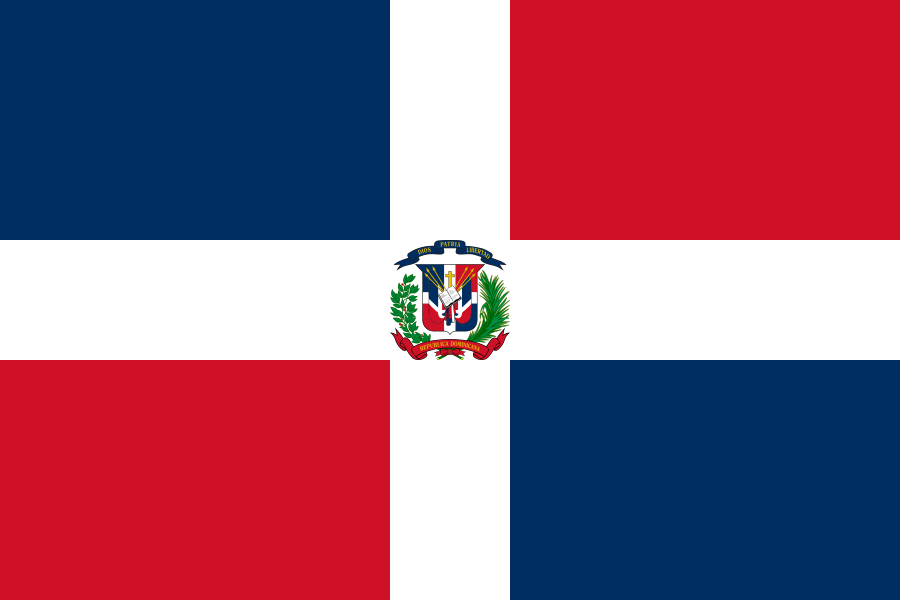
DR 🎵 Music Música 🔬 Science Ciencias 🏀 PE Educación Física 🏀 PE Educación Física 📚 Library Biblioteca
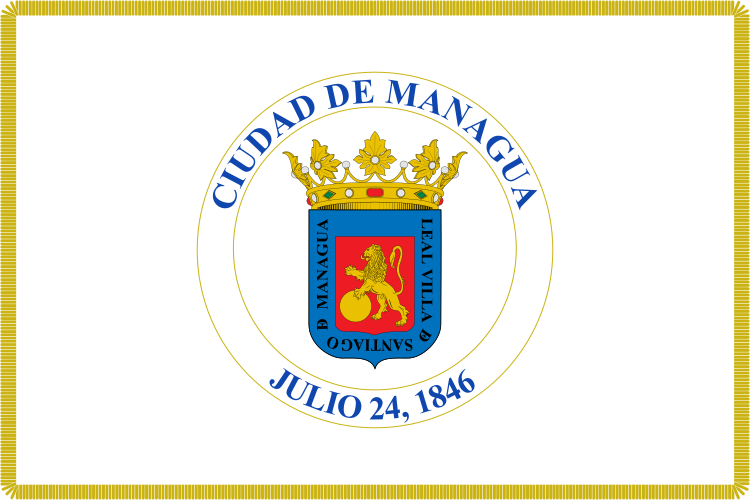
Managua 🎨 Art Arte 🎵 Music Música 🔬 Science Ciencias 🏀 PE Educación Física 🏀 PE Educación Física
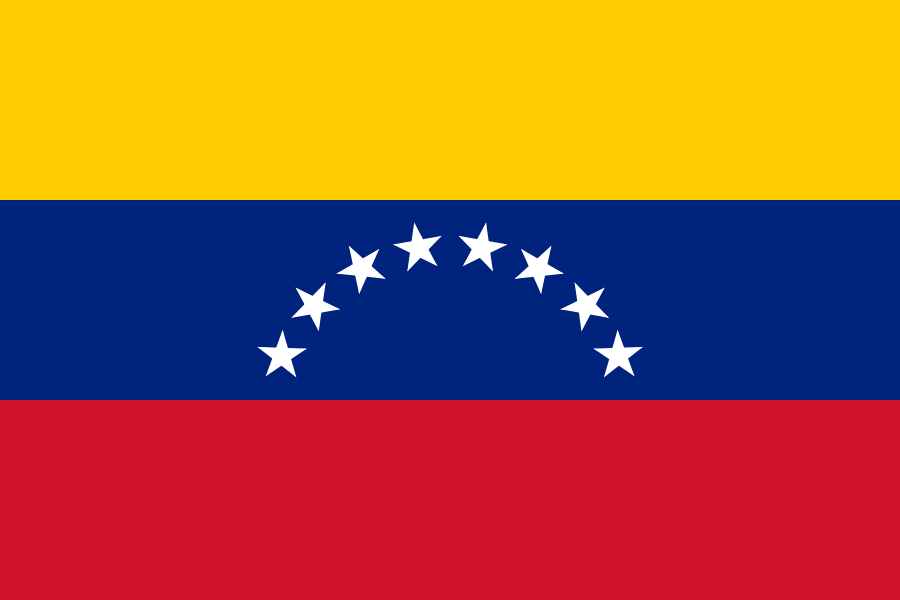
Venezuela 🔬 Science Ciencias 🏀 PE Educación Física 🏀 PE Educación Física 📚 Library Biblioteca 🎨 Art Arte

What We're Learning Lo Que Estamos Aprendiendo

Welcome · Math · Literacy Bienvenida · Mates · Lectura

From your teacher De tu maestra

It's hard to believe we're already in the final stretch of the year — what a year it has been! From the first wobbly days of first grade to becoming confident readers, writers, and mathematicians, your children have grown so much, and we could not be prouder of every one of them. Thank you for trusting us with them and for all your support at home.

Monday is our end-of-year picnic — see you all at 1:00 pm! If you'd like to help set up, please arrive by 12:30 pm. And Tuesday is Field Day — please send your child in comfortable clothes and sneakers, with a water bottle.

Let's celebrate together everything our students have accomplished. Here's to a joyful finish to a wonderful year!

Cuesta creer que ya estamos en la recta final del año — ¡qué año ha sido! Desde los primeros días temblorosos de primer grado hasta convertirse en lectores, escritores y matemáticos seguros de sí mismos, sus hijos/as han crecido muchísimo, y no podríamos estar más orgullosos de cada uno de ellos. Gracias por confiárnoslos y por todo su apoyo en casa.

¡El lunes es nuestro picnic de fin de año — los esperamos a todos a la 1:00 pm! Si desean ayudar con los preparativos, por favor lleguen a las 12:30 pm. Y el martes es el Día de Campo (Field Day) — por favor envíen a su hijo/a con ropa cómoda, tenis y una botella de agua.

Celebremos juntos todo lo que nuestros estudiantes han logrado. ¡Por un final alegre para un año maravilloso!

Math News Noticias de Matemáticas

This week, students will continue learning how to solve different types of addition and subtraction word problems using the familiar Read-Draw-Write process. Students are moving from quick drawings into tape diagrams that show what the problem is asking. After drawing, they write an addition or subtraction equation to match and then solve.

Students are also using small objects, such as paper clips and cubes, to measure length and connect measurement to comparison word problems.

At home, your child would love to:

Measure family members' feet with small items, such as crayons or cotton swabs. Remind your child to line the objects up end to end with no gaps or overlaps.
• Compare the lengths using words like longer, shorter, and about. For example: "My foot is 2 crayons shorter than your foot."
• Measure again with a different object and talk about why the number changed.

Esta semana, los estudiantes continuarán aprendiendo a resolver diferentes tipos de problemas de suma y resta usando el proceso conocido de Leer-Dibujar-Escribir. Están pasando de dibujos rápidos a diagramas de cinta que muestran lo que pregunta el problema. Después de dibujar, escriben una ecuación de suma o resta que corresponde al problema y luego lo resuelven.

También están usando objetos pequeños, como clips y cubos, para medir longitudes y conectar la medición con problemas de comparación.

En casa, a su hijo/a le encantaría:

Medir los pies de los miembros de la familia con objetos pequeños, como crayones o hisopos. Recuérdenle que alinee los objetos de punta a punta, sin espacios ni traslapes.
• Comparar las longitudes usando palabras como más largo, más corto y aproximadamente. Por ejemplo: «Mi pie es 2 crayones más corto que tu pie».
• Medir otra vez con un objeto diferente y conversar sobre por qué cambió el número.

Module End-of-year math review
Topic Word problems and measurement
Lesson Read-Draw-Write, tape diagrams, and comparing lengths

Literacy News Noticias de Lectura y Escritura

In SLA, students will read a variety of informational and narrative texts to identify and learn key ideas about the first inhabitants of Spanish America. In word study, we are reviewing the spelling of words with z, c, s, que, qui, and g.

How you can help in Spanish at home:

• Read together and ask: «¿De qué se trata este texto?» and «¿Cuál es una idea importante?»
• Practice reading and writing a few words that use z, c, s, que, qui, and g.

In ELA, we will continue our conversations about American Symbols — this week the bald eagle and the song "America the Beautiful." In honor of June, we will also gently introduce the concept of Pride; please feel free to discuss it with your child and reach out to your child's teacher with any questions. Please keep reading in English for at least 20 minutes a day and practicing heart words at home.

En SLA, los estudiantes leerán diferentes textos informativos y narrativos para identificar y aprender ideas clave sobre los primeros habitantes de Hispanoamérica. En estudio de palabras, repasaremos la ortografía de palabras con z, c, s, que, qui y g.

Cómo pueden ayudar en español en casa:

• Lean juntos y pregunten: «¿De qué se trata este texto?» y «¿Cuál es una idea importante?»
• Practiquen leer y escribir algunas palabras que usen z, c, s, que, qui y g.

En ELA, continuaremos nuestras conversaciones sobre los Símbolos Estadounidenses (American Symbols) — esta semana el águila calva y la canción "America the Beautiful". En honor al mes de junio, también introduciremos poco a poco el concepto de Pride (Orgullo); con gusto pueden conversarlo con su hijo/a y comunicarse con el maestro/a de su hijo/a si tienen preguntas. Por favor, continúen leyendo en inglés por lo menos 20 minutos al día y practicando las heart words en casa.

Talk At Home Conversar en Casa

4 questions · 18 vocabulary words 4 preguntas · 18 palabras de vocabulario
  • Can you draw a tape diagram for an addition or subtraction story problem? ¿Puedes dibujar un diagrama de cinta para un problema de suma o resta?
  • Whose foot is longer? How do you know from your measurement? ¿Qué pie es más largo? ¿Cómo lo sabes por tu medición?
  • What did you learn about the bald eagle or "America the Beautiful"? ¿Qué aprendiste sobre el águila calva o "America the Beautiful"?
  • What is one key idea you learned about the first inhabitants of Spanish America? ¿Cuál es una idea clave que aprendiste sobre los primeros habitantes de Hispanoamérica?

📝  Words of the Week Palabras de la Semana tap to flip toca para girar

Math
Read-Draw-Write tape diagram equation measure longer shorter
SLA
texto informativo texto narrativo idea clave primeros habitantes Hispanoamérica estudio de palabras
ELA
American symbol bald eagle America the Beautiful heart words song read aloud

ROARS

This week's shout-outs Reconocimientos de la semana

Congratulations to this week's ROARS students for showing outstanding character! ¡Felicitaciones a los estudiantes ROARS de esta semana por demostrar carácter sobresaliente!

Cartagena
Mateo Z.
Colombia
Geoffrey M.
España
James H.
DR
Samuel P.
Managua
Axel G.
Venezuela
Zoe C.

Bancroft Elementary School · First Grade Bancroft Elementary School · Primer Grado

Established 2025

The Bancroft

First Grade

A weekly classroom letter, in two languages, for the families of Bancroft Elementary School.

Vol. I · Issue 37 Washington, DC · June 8, 2026
Week
42 / 44
7 days remaining 7 días restantes
Today
Day C
Up Next
1st-Grade End-of-Year Potluck & Picnic — Monday, June 8, 1:00-2:00 pm in the Bancroft Gym
MON JUN 8
This Week's Roars

This Week's ROARS

Los ROARS de la Semana

Congratulations to this week's 1st grade ROAR winners!

Cartagena
Cartagena
Mateo Z.
Colombia
Colombia
Geoffrey M.
España
España
James H.
DR
DR
Samuel P.
Managua
Managua
Axel G.
Venezuela
Venezuela
Zoe C.
02

Datelines

What to put on the fridge.
03

From the Teacher

A note for this week.

It's hard to believe we're already in the final stretch of the year — what a year it has been! From the first wobbly days of first grade to becoming confident readers, writers, and mathematicians, your children have grown so much, and we could not be prouder of every one of them. Thank you for trusting us with them and for all your support at home.

Monday is our end-of-year picnic — see you all at 1:00 pm! If you'd like to help set up, please arrive by 12:30 pm. And Tuesday is Field Day — please send your child in comfortable clothes and sneakers, with a water bottle.

Let's celebrate together everything our students have accomplished. Here's to a joyful finish to a wonderful year!

Cuesta creer que ya estamos en la recta final del año — ¡qué año ha sido! Desde los primeros días temblorosos de primer grado hasta convertirse en lectores, escritores y matemáticos seguros de sí mismos, sus hijos/as han crecido muchísimo, y no podríamos estar más orgullosos de cada uno de ellos. Gracias por confiárnoslos y por todo su apoyo en casa.

¡El lunes es nuestro picnic de fin de año — los esperamos a todos a la 1:00 pm! Si desean ayudar con los preparativos, por favor lleguen a las 12:30 pm. Y el martes es el Día de Campo (Field Day) — por favor envíen a su hijo/a con ropa cómoda, tenis y una botella de agua.

Celebremos juntos todo lo que nuestros estudiantes han logrado. ¡Por un final alegre para un año maravilloso!

“Thank you for trusting us with them and for all your support at home” «Gracias por confiárnoslos y por todo su apoyo en casa» From your teacher
04

The Specials Board

Week of June 8 · Days C–A Semana del 8 de junio · Días C–A
M C T D W E Th F F A
Cartagena Cartagena 🏀 PE 🏀 PE 📚 Lib 🎨 Art 🎵 Music
Colombia Colombia 🏀 PE 📚 Lib 🎨 Art 🎵 Music 🔬 Sci
España España 📚 Lib 🎨 Art 🎵 Music 🔬 Sci 🏀 PE
DR DR 🎵 Music 🔬 Sci 🏀 PE 🏀 PE 📚 Lib
Managua Managua 🎨 Art 🎵 Music 🔬 Sci 🏀 PE 🏀 PE
Venezuela Venezuela 🔬 Sci 🏀 PE 🏀 PE 📚 Lib 🎨 Art

► Highlighted row is your selected classroom. ► La fila resaltada es tu salón seleccionado.

05

Mathematics

What we're learning this week.

This week, students will continue learning how to solve different types of addition and subtraction word problems using the familiar Read-Draw-Write process. Students are moving from quick drawings into tape diagrams that show what the problem is asking. After drawing, they write an addition or subtraction equation to match and then solve.

Students are also using small objects, such as paper clips and cubes, to measure length and connect measurement to comparison word problems.

At home, your child would love to:

Measure family members' feet with small items, such as crayons or cotton swabs. Remind your child to line the objects up end to end with no gaps or overlaps.
• Compare the lengths using words like longer, shorter, and about. For example: "My foot is 2 crayons shorter than your foot."
• Measure again with a different object and talk about why the number changed.

Esta semana, los estudiantes continuarán aprendiendo a resolver diferentes tipos de problemas de suma y resta usando el proceso conocido de Leer-Dibujar-Escribir. Están pasando de dibujos rápidos a diagramas de cinta que muestran lo que pregunta el problema. Después de dibujar, escriben una ecuación de suma o resta que corresponde al problema y luego lo resuelven.

También están usando objetos pequeños, como clips y cubos, para medir longitudes y conectar la medición con problemas de comparación.

En casa, a su hijo/a le encantaría:

Medir los pies de los miembros de la familia con objetos pequeños, como crayones o hisopos. Recuérdenle que alinee los objetos de punta a punta, sin espacios ni traslapes.
• Comparar las longitudes usando palabras como más largo, más corto y aproximadamente. Por ejemplo: «Mi pie es 2 crayones más corto que tu pie».
• Medir otra vez con un objeto diferente y conversar sobre por qué cambió el número.

06

Literacy

Reading & writing news.

In SLA, students will read a variety of informational and narrative texts to identify and learn key ideas about the first inhabitants of Spanish America. In word study, we are reviewing the spelling of words with z, c, s, que, qui, and g.

How you can help in Spanish at home:

• Read together and ask: «¿De qué se trata este texto?» and «¿Cuál es una idea importante?»
• Practice reading and writing a few words that use z, c, s, que, qui, and g.

In ELA, we will continue our conversations about American Symbols — this week the bald eagle and the song "America the Beautiful." In honor of June, we will also gently introduce the concept of Pride; please feel free to discuss it with your child and reach out to your child's teacher with any questions. Please keep reading in English for at least 20 minutes a day and practicing heart words at home.

En SLA, los estudiantes leerán diferentes textos informativos y narrativos para identificar y aprender ideas clave sobre los primeros habitantes de Hispanoamérica. En estudio de palabras, repasaremos la ortografía de palabras con z, c, s, que, qui y g.

Cómo pueden ayudar en español en casa:

• Lean juntos y pregunten: «¿De qué se trata este texto?» y «¿Cuál es una idea importante?»
• Practiquen leer y escribir algunas palabras que usen z, c, s, que, qui y g.

En ELA, continuaremos nuestras conversaciones sobre los Símbolos Estadounidenses (American Symbols) — esta semana el águila calva y la canción "America the Beautiful". En honor al mes de junio, también introduciremos poco a poco el concepto de Pride (Orgullo); con gusto pueden conversarlo con su hijo/a y comunicarse con el maestro/a de su hijo/a si tienen preguntas. Por favor, continúen leyendo en inglés por lo menos 20 minutos al día y practicando las heart words en casa.

07

Ask Your Child

Three openers for the dinner table.
  1. Can you draw a tape diagram for an addition or subtraction story problem? ¿Puedes dibujar un diagrama de cinta para un problema de suma o resta?
  2. Whose foot is longer? How do you know from your measurement? ¿Qué pie es más largo? ¿Cómo lo sabes por tu medición?
  3. What did you learn about the bald eagle or "America the Beautiful"? ¿Qué aprendiste sobre el águila calva o "America the Beautiful"?
  4. What is one key idea you learned about the first inhabitants of Spanish America? ¿Cuál es una idea clave que aprendiste sobre los primeros habitantes de Hispanoamérica?
08

Words of the Week

Tap any word to translate.
Math
Read-Draw-Writetape diagramequationmeasurelongershorter
SLA
texto informativotexto narrativoidea claveprimeros habitantesHispanoaméricaestudio de palabras
ELA
American symbolbald eagleAmerica the Beautifulheart wordssongread aloud

The Bancroft Weekly · First Grade

Published Mondays by your 1st grade team at Bancroft Elementary School, Washington, DC. Set in Fraunces & DM Sans. Printed at your kitchen table. Publicado los lunes por el equipo de primer grado de la Escuela Primaria Bancroft, Washington DC. Compuesto en Fraunces y DM Sans. Impreso en su mesa de cocina.

Bancroft
1st Grade · Bancroft
Week of June 8, 2026 · Week 42/44
170 of 177
7 left
📲
Add to Home Screen for one-tap access every Monday.
Today · Monday
Jun 8
Dismissal 3:15 pm
Today's Special
📅 Day C
Up Next
📌 1st-Grade End-of-Year Potluck · JUN 8
📌

Reminders

Jun 8 · 1st-Grade End-of-Year Potluc · Jun 9 · Field Day · Jun 18 · Last Day of School
3
  • JUN
    8
    1st-Grade End-of-Year Potluck & Picnic — Monday, June 8, 1:00-2:00 pm in the Bancroft Gym. Please sign up to bring a dish and come celebrate a wonderful year together!
  • JUN
    9
    Field Day — Tuesday, June 9. Send your child in comfortable clothes and sneakers, with a water bottle.
  • JUN
    18
    Last Day of School — Thursday, June 18.
🎨

Specials

Tap your child's class
M
📅
Day C
C
T
📅
Day D
D
W
📅
Day E
E
Th
📅
Day F
F
F
📅
Day A
A
Compare all 6 classrooms ·
👋

From the Teacher

It's hard to believe we're already in the final stretch of the year — what a yea

It's hard to believe we're already in the final stretch of the year — what a year it has been! From the first wobbly days of first grade to becoming confident readers, writers, and mathematicians, your children have grown so much, and we could not be prouder of every one of them. Thank you for trusting us with them and for all your support at home.

Monday is our end-of-year picnic — see you all at 1:00 pm! If you'd like to help set up, please arrive by 12:30 pm. And Tuesday is Field Day — please send your child in comfortable clothes and sneakers, with a water bottle.

Let's celebrate together everything our students have accomplished. Here's to a joyful finish to a wonderful year!

Cuesta creer que ya estamos en la recta final del año — ¡qué año ha sido! Desde los primeros días temblorosos de primer grado hasta convertirse en lectores, escritores y matemáticos seguros de sí mismos, sus hijos/as han crecido muchísimo, y no podríamos estar más orgullosos de cada uno de ellos. Gracias por confiárnoslos y por todo su apoyo en casa.

¡El lunes es nuestro picnic de fin de año — los esperamos a todos a la 1:00 pm! Si desean ayudar con los preparativos, por favor lleguen a las 12:30 pm. Y el martes es el Día de Campo (Field Day) — por favor envíen a su hijo/a con ropa cómoda, tenis y una botella de agua.

Celebremos juntos todo lo que nuestros estudiantes han logrado. ¡Por un final alegre para un año maravilloso!

🔢

Math

This week, students will continue learning how to solve different types of addit

This week, students will continue learning how to solve different types of addition and subtraction word problems using the familiar Read-Draw-Write process. Students are moving from quick drawings into tape diagrams that show what the problem is asking. After drawing, they write an addition or subtraction equation to match and then solve.

Students are also using small objects, such as paper clips and cubes, to measure length and connect measurement to comparison word problems.

At home, your child would love to:

Measure family members' feet with small items, such as crayons or cotton swabs. Remind your child to line the objects up end to end with no gaps or overlaps.
• Compare the lengths using words like longer, shorter, and about. For example: "My foot is 2 crayons shorter than your foot."
• Measure again with a different object and talk about why the number changed.

Esta semana, los estudiantes continuarán aprendiendo a resolver diferentes tipos de problemas de suma y resta usando el proceso conocido de Leer-Dibujar-Escribir. Están pasando de dibujos rápidos a diagramas de cinta que muestran lo que pregunta el problema. Después de dibujar, escriben una ecuación de suma o resta que corresponde al problema y luego lo resuelven.

También están usando objetos pequeños, como clips y cubos, para medir longitudes y conectar la medición con problemas de comparación.

En casa, a su hijo/a le encantaría:

Medir los pies de los miembros de la familia con objetos pequeños, como crayones o hisopos. Recuérdenle que alinee los objetos de punta a punta, sin espacios ni traslapes.
• Comparar las longitudes usando palabras como más largo, más corto y aproximadamente. Por ejemplo: «Mi pie es 2 crayones más corto que tu pie».
• Medir otra vez con un objeto diferente y conversar sobre por qué cambió el número.

📖

Literacy

In SLA, students will read a variety of informational and narrative texts to ide

In SLA, students will read a variety of informational and narrative texts to identify and learn key ideas about the first inhabitants of Spanish America. In word study, we are reviewing the spelling of words with z, c, s, que, qui, and g.

How you can help in Spanish at home:

• Read together and ask: «¿De qué se trata este texto?» and «¿Cuál es una idea importante?»
• Practice reading and writing a few words that use z, c, s, que, qui, and g.

In ELA, we will continue our conversations about American Symbols — this week the bald eagle and the song "America the Beautiful." In honor of June, we will also gently introduce the concept of Pride; please feel free to discuss it with your child and reach out to your child's teacher with any questions. Please keep reading in English for at least 20 minutes a day and practicing heart words at home.

En SLA, los estudiantes leerán diferentes textos informativos y narrativos para identificar y aprender ideas clave sobre los primeros habitantes de Hispanoamérica. En estudio de palabras, repasaremos la ortografía de palabras con z, c, s, que, qui y g.

Cómo pueden ayudar en español en casa:

• Lean juntos y pregunten: «¿De qué se trata este texto?» y «¿Cuál es una idea importante?»
• Practiquen leer y escribir algunas palabras que usen z, c, s, que, qui y g.

En ELA, continuaremos nuestras conversaciones sobre los Símbolos Estadounidenses (American Symbols) — esta semana el águila calva y la canción "America the Beautiful". En honor al mes de junio, también introduciremos poco a poco el concepto de Pride (Orgullo); con gusto pueden conversarlo con su hijo/a y comunicarse con el maestro/a de su hijo/a si tienen preguntas. Por favor, continúen leyendo en inglés por lo menos 20 minutos al día y practicando las heart words en casa.

💬

Ask Your Child

4 conversation starters for tonight
4
  • Can you draw a tape diagram for an addition or subtraction story problem?
  • Whose foot is longer? How do you know from your measurement?
  • What did you learn about the bald eagle or "America the Beautiful"?
  • What is one key idea you learned about the first inhabitants of Spanish America?
📝

Words of the Week

18 words · tap to flip EN ⇄ ES
18
Math
Read-Draw-Write tape diagram equation measure longer shorter
SLA
texto informativo texto narrativo idea clave primeros habitantes Hispanoamérica estudio de palabras
ELA
American symbol bald eagle America the Beautiful heart words song read aloud
🐯

ROARS

6 shout-outs this week
★ 6

Congratulations to this week's character stars!

Cartagena
Mateo Z.
Cartagena
Colombia
Geoffrey M.
Colombia
España
James H.
España
DR
Samuel P.
DR
Managua
Axel G.
Managua
Venezuela
Zoe C.
Venezuela

Bancroft 1st Grade Weekly

Issue 37 · June 8, 2026

School Year at a Glance
42/44
Week
7
school days remaining
Coming Up
  • Jun 18 Last Day of School Last Day
  • Jun 19 Juneteenth No School
🎨

Specials Schedule

Monday
Day C
Tuesday
Day D
Wednesday
Day E
Thursday
Day F
Friday
Day A
Cartagena 🏀
PE
🏀
PE
📚
Library
🎨
Art
🎵
Music
Colombia 🏀
PE
📚
Library
🎨
Art
🎵
Music
🔬
Science
España 📚
Library
🎨
Art
🎵
Music
🔬
Science
🏀
PE
DR 🎵
Music
🔬
Science
🏀
PE
🏀
PE
📚
Library
Managua 🎨
Art
🎵
Music
🔬
Science
🏀
PE
🏀
PE
Venezuela 🔬
Science
🏀
PE
🏀
PE
📚
Library
🎨
Art
👋

Hello 1st Grade Families!

It's hard to believe we're already in the final stretch of the year — what a year it has been! From the first wobbly days of first grade to becoming confident readers, writers, and mathematicians, your children have grown so much, and we could not be prouder of every one of them. Thank you for trusting us with them and for all your support at home. Monday is our end-of-year picnic — see you all at 1:00 pm! If you'd like to help set up, please arrive by 12:30 pm. And Tuesday is Field Day — please send your child in comfortable clothes and sneakers, with a water bottle. Let's celebrate together everything our students have accomplished. Here's to a joyful finish to a wonderful year!

🔢

Math News

This week, students will continue learning how to solve different types of addition and subtraction word problems using the familiar Read-Draw-Write process. Students are moving from quick drawings into tape diagrams that show what the problem is asking. After drawing, they write an addition or subtraction equation to match and then solve.

Students are also using small objects, such as paper clips and cubes, to measure length and connect measurement to comparison word problems.

At home, your child would love to:

Measure family members' feet with small items, such as crayons or cotton swabs. Remind your child to line the objects up end to end with no gaps or overlaps.
• Compare the lengths using words like longer, shorter, and about. For example: "My foot is 2 crayons shorter than your foot."
• Measure again with a different object and talk about why the number changed.

Module End-of-year math review
Topic Word problems and measurement
Lesson Read-Draw-Write, tape diagrams, and comparing lengths
📖

Literacy News

In SLA, students will read a variety of informational and narrative texts to identify and learn key ideas about the first inhabitants of Spanish America. In word study, we are reviewing the spelling of words with z, c, s, que, qui, and g.

How you can help in Spanish at home:

• Read together and ask: «¿De qué se trata este texto?» and «¿Cuál es una idea importante?»
• Practice reading and writing a few words that use z, c, s, que, qui, and g.

In ELA, we will continue our conversations about American Symbols — this week the bald eagle and the song "America the Beautiful." In honor of June, we will also gently introduce the concept of Pride; please feel free to discuss it with your child and reach out to your child's teacher with any questions. Please keep reading in English for at least 20 minutes a day and practicing heart words at home.

📌

Important Reminders

JUN 8
1st-Grade End-of-Year Potluck & Picnic — Monday, June 8, 1:00-2:00 pm in the Bancroft Gym. Please sign up to bring a dish and come celebrate a wonderful year together!
JUN 9
Field Day — Tuesday, June 9. Send your child in comfortable clothes and sneakers, with a water bottle.
JUN 18
Last Day of School — Thursday, June 18.
💬

Ask Your Child About...

Can you draw a tape diagram for an addition or subtraction story problem?
Whose foot is longer? How do you know from your measurement?
What did you learn about the bald eagle or "America the Beautiful"?
What is one key idea you learned about the first inhabitants of Spanish America?
📝

Words of the Week

Math
Read-Draw-Write Leer-Dibujar-Escribir tape diagram diagrama de cinta equation ecuación measure medir longer más largo shorter más corto
SLA
texto informativo informational text texto narrativo narrative text idea clave key idea primeros habitantes first inhabitants Hispanoamérica Spanish America estudio de palabras word study
ELA
American symbol símbolo estadounidense bald eagle águila calva America the Beautiful America the Beautiful heart words heart words song canción read aloud leer en voz alta
🐯

ROARS

Congratulations to this week's ROARS students for showing outstanding character!

Cartagena Cartagena

Mateo Z.
Colombia Colombia
Geoffrey M.
España España
James H.
DR DR
Samuel P.
Managua Managua
Axel G.
Venezuela Venezuela
Zoe C.
Past Newsletters

Bancroft Elementary School — First Grade